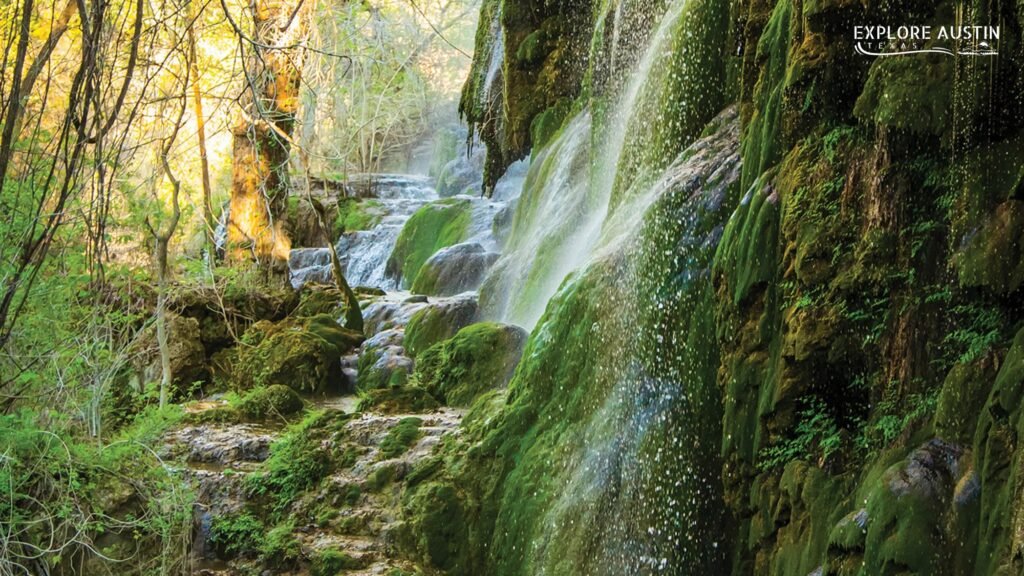
Austin doesn’t look like waterfall country at first glance. It’s flat in spots, dry for long stretches, and bone-hot from June through September. But anyone who’s actually explored the limestone canyons and creek beds hiding around this city knows the truth — the waterfalls in Austin and the surrounding Hill Country are genuinely some of the most beautiful natural spots in the entire state of Texas. You just have to know where to look, and in some cases, when to go.
This guide covers everything from the falls you can reach in under 20 minutes from downtown to the jaw-dropping destinations that are worth clearing a full Saturday for.
McKinney Falls State Park — The Best Waterfall Inside Austin City Limits
If you’re looking for a waterfall in Austin without driving more than 15 minutes from downtown, McKinney Falls State Park is the answer. It sits entirely within the city limits — just 13 miles from the State Capitol — and it packs more natural character into its 744 acres than most people expect from an urban park.
The park’s signature feature is its two distinct falls on Onion Creek: the Upper McKinney Falls and the Lower McKinney Falls. The upper falls channel Onion Creek into a chute roughly 15 to 20 feet tall, creating strong pockets of water that are ideal for wading and lounging on the surrounding limestone ledges. The lower falls are wider, more dramatic after a good rain, and formed by the combined flow of Onion Creek and Williamson Creek dropping over a broad limestone bench into a deep swimming hole. Lower McKinney Falls is gentler and more suitable for younger kids, while the upper falls attracts swimmers who are comfortable in deeper, faster-moving water.
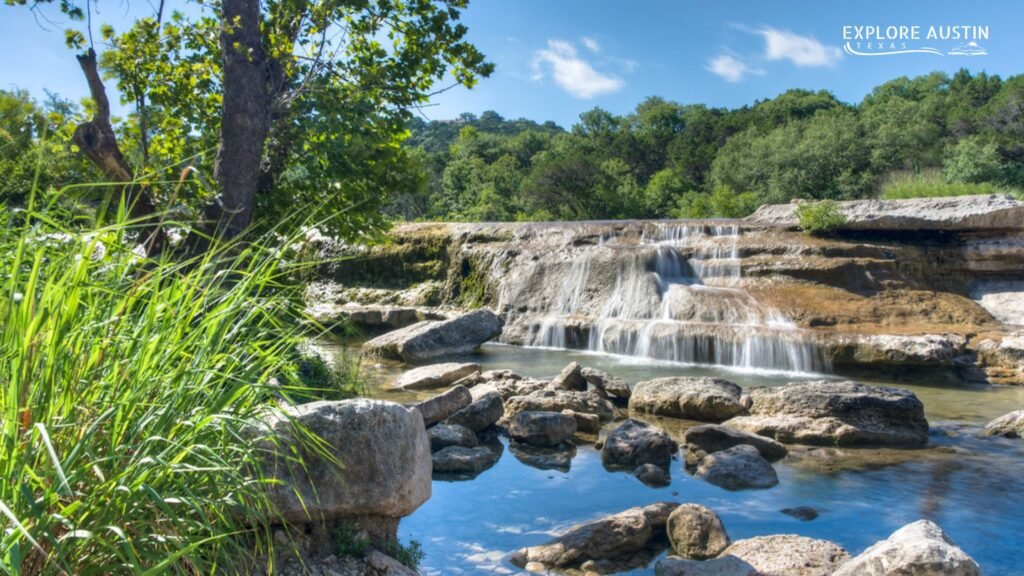
The park also has nearly nine miles of hiking trails, mountain biking routes, historic ruins from Thomas McKinney’s 19th-century homestead, and a 500-year-old bald cypress tree nicknamed “Old Baldy” that alone is worth a look. Entry is $6 per person — or free with a Texas State Parks Pass — and reservations are strongly recommended because this place fills up fast on warm weekends.
One practical note: food, alcohol, glass, and coolers are not permitted at either falls area. Come with water, water shoes, and a towel and you’re set.
Sculpture Falls and Twin Falls — Austin’s Greenbelt Legends
No guide to waterfall hiking trails in Austin is complete without the Barton Creek Greenbelt. These two swimming holes and seasonal waterfalls are what locals grew up at, and they remain the most-visited natural spots inside the city.
Twin Falls sits about a mile in from the Scottish Woods trailhead — a modest hike over rocky terrain through cedar and limestone walls. The falls themselves split into two channels cascading into a clear pool below, perfect for wading and jumping. A little further down the same trail, about 1.5 miles from the trailhead, you reach Sculpture Falls: a wider, more open cascade that drops into a larger swimming hole with room to spread out, sunbathe on flat limestone slabs, and float in water that hovers around 70 degrees thanks to the Edwards Aquifer feeding the creek.
Both are seasonal — after a summer drought, the creek can run dry entirely — so checking conditions before making the trip is genuinely important. After a good rain, though, there’s nowhere better in the city. Parking at the Scottish Woods trailhead requires a fee, so arrive early on weekends or plan to walk from surrounding streets. Dogs are welcome on the trails and in the water, making this a top dog-friendly waterfall option in Austin.
Hamilton Pool — The One Everyone Puts on Their Bucket List
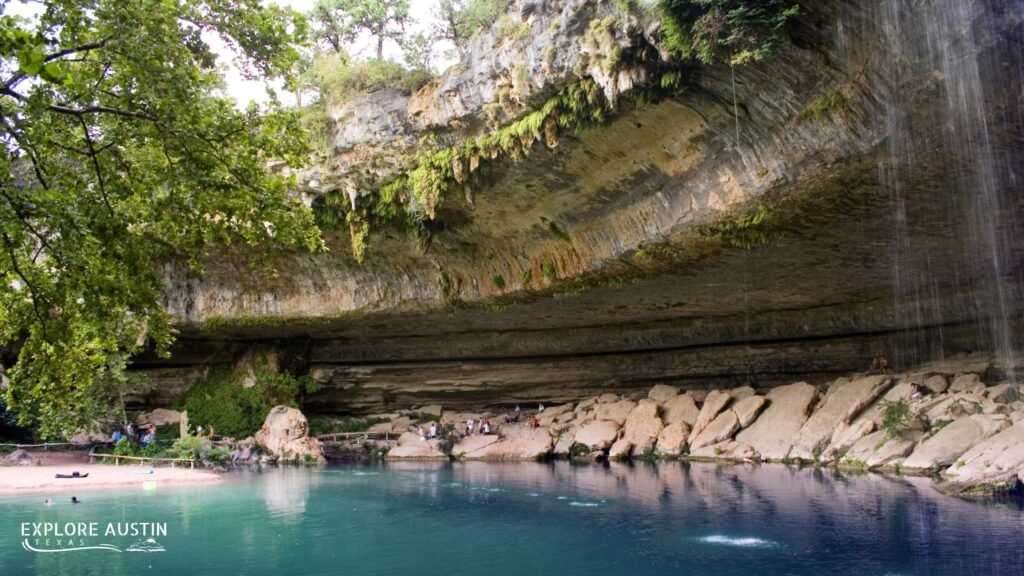
About 45 minutes west of downtown Austin near Dripping Springs, Hamilton Pool Preserve is the waterfall that turns first-time visitors into lifelong Texas nature fans. Hamilton Creek spills 50 feet over a collapsed limestone grotto into an emerald-green pool below — the kind of scene that stops people mid-sentence when they round the corner on the quarter-mile trail down from the parking area.
The collapsed grotto creates a natural amphitheater effect, with ferns growing along the rock face and the mist from the falls cooling the air around the pool. On a hot July afternoon, stepping into that mist is one of the better feelings Texas outdoor life has to offer.
The catch is logistics. Hamilton Pool requires advance reservations, which sell out weeks ahead during summer weekends. Entry is $12 per vehicle plus $8 per adult — cash only at the gate. Swimming is not always permitted; bacteria levels after heavy rain can close the pool temporarily, so checking current conditions on the Travis County Parks website before driving out is essential. Pets are not allowed inside the preserve, and neither is camping.
If you’re planning a day trip from Austin that includes more than one waterfall, Hamilton Pool pairs naturally with nearby Westcave Preserve — a 40-foot waterfall inside a sheltered canyon grotto that can only be visited via guided tour — and Pedernales Falls State Park just a few miles down the road.
River Place Nature Trail — The Waterfall Hike That Earns It
For hikers who want to actually work for their waterfall, River Place Nature Trail on the west side of Austin is the move. This is not an easy walk. The trail climbs 833 feet in elevation through canyon terrain with steep stairs, uneven footing, and narrow rocky ledges — but the waterfall and canyon views waiting at the top are the payoff.
It’s one of the more underrated waterfall hiking experiences in Austin because the difficulty keeps casual visitors away, meaning you actually get some peace and quiet when you arrive. Bring plenty of water, proper trail shoes, and don’t attempt it in the middle of a summer afternoon.
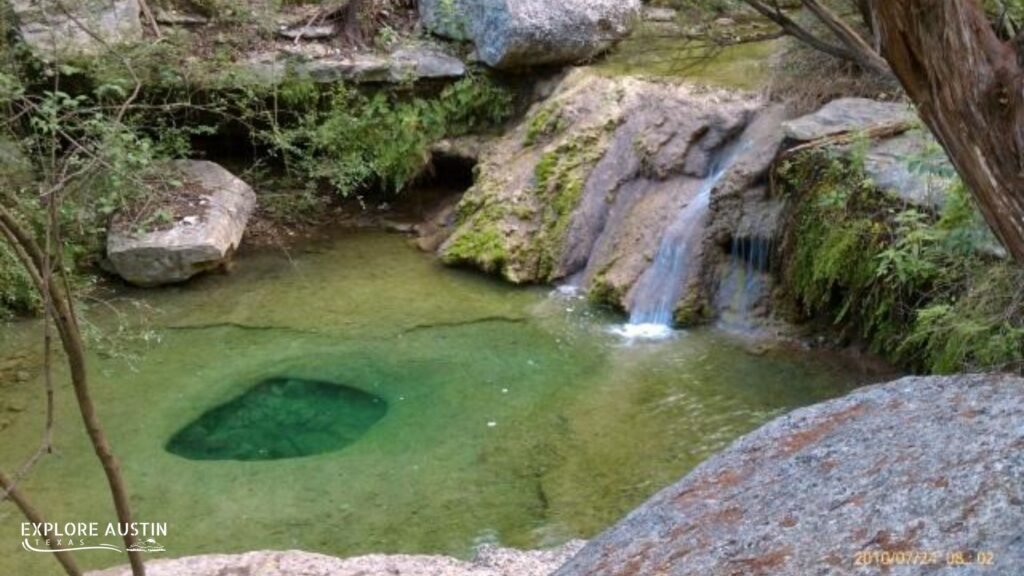
The Hill Country Day Trips Worth the Drive
Krause Springs in Spicewood — about 30 miles west of Austin — is a hidden gem that deserves far more attention. Thirty-two natural springs feed into a series of natural and man-made pools, and the waterfall at the center drops into a 68-degree swimming hole year-round. Behind the curtain of falling water, there’s a rope swing and a small cave. That combination alone makes it one of the best waterfall swimming experiences within an hour of the city.
Pedernales Falls State Park near Johnson City sits about an hour west of Austin and delivers a completely different kind of waterfall — wide rather than tall, spread across the Pedernales River in layers of flat limestone stepped like a staircase. Swimming is not permitted at the falls themselves due to flash flood risk, but there’s a designated swimming area downriver that’s excellent. The trails here are easy, the scenery is classic Texas Hill Country, and the fall foliage in October is genuinely stunning.
Gorman Falls at Colorado Bend State Park is the one that earns “most beautiful in Central Texas” comparisons — a 70-foot spring-fed waterfall draped in ferns and moss, feeding into the Colorado River. It’s a 3-mile round-trip hike on rocky terrain with a 200-foot elevation change. Swimming is not allowed at the falls, but the hike alone is worth every bit of the two-hour drive from Austin.
When to Go and What to Know Before You Leave
The best time to see waterfalls near Austin is between November and June, when rainfall keeps the creeks and springs flowing at their best. Summer brings the crowds and the heat but also dries out seasonal falls like Twin Falls and Sculpture Falls — always check conditions online before making the drive.
A few things that’ll save you frustration. Hamilton Pool reservations disappear fast — book the moment dates open. McKinney Falls and Pedernales Falls both recommend advance day passes, especially on weekends. Gorman Falls requires a state park entry fee ($5 adults). Most waterfall trails after rain austin require water shoes — the limestone gets extremely slippery. And for any of the Barton Creek Greenbelt spots, early morning on a weekday is the version of the experience you want.
Frequently Asked Questions
Yes. McKinney Falls State Park sits entirely within Austin city limits, just 13 miles from the State Capitol, and features both an upper and lower waterfall on Onion Creek. Sculpture Falls and Twin Falls in the Barton Creek Greenbelt are also within the city. These are the most accessible waterfalls in Austin without any long drive.
McKinney Falls State Park is the top choice for families — Lower McKinney Falls has shallower water ideal for younger children, the trails are easy and well-maintained, and the park has restrooms, campsites, and a visitor center. Krause Springs in Spicewood is another excellent family-friendly option with swimming pools fed by 32 springs and a relaxed, resort-like atmosphere. Both allow dogs on a leash.
Yes, reservations are required and sell out weeks in advance during summer. Entry is $12 per vehicle plus $8 per adult (cash only). Swimming is not always permitted — bacteria levels after rain sometimes close the pool — so check the Travis County Parks website for current conditions before your visit. Weekday reservations during spring are the easiest to secure.
November through June is the best window. Spring months — particularly March, April, and May — offer the highest chance of strong water flow after winter rains, mild temperatures, and wildflowers along the trails. Summer (July–September) is the driest period and many seasonal falls like Sculpture Falls and Twin Falls can run completely dry. After a significant rainfall any time of year, Austin waterfalls like McKinney Falls and Barton Creek come alive — checking recent rainfall before any trip is always the smart move.