When people think about Austin, live music and breakfast tacos usually come to mind first. But anyone who’s actually lived here knows the rivers in Austin Texas are just as much a part of the culture as anything on Sixth Street. From the Colorado River winding through the heart of the city to spring-fed creeks hidden inside neighborhood greenbelts, Austin sits at one of the most water-rich crossroads in the entire state — and locals take full advantage of every inch of it.
Whether you’re new to the city, planning a summer trip, or just looking to finally explore what’s been sitting in your backyard, this guide covers everything you need to know about the waterways that make Austin one of the best outdoor cities in Texas.
The Colorado River: Austin’s Backbone
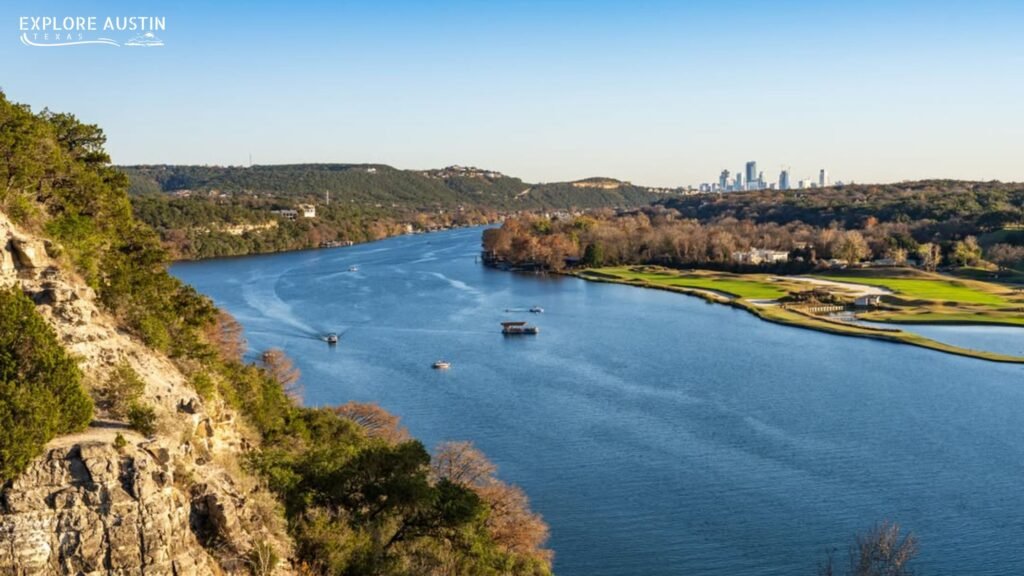
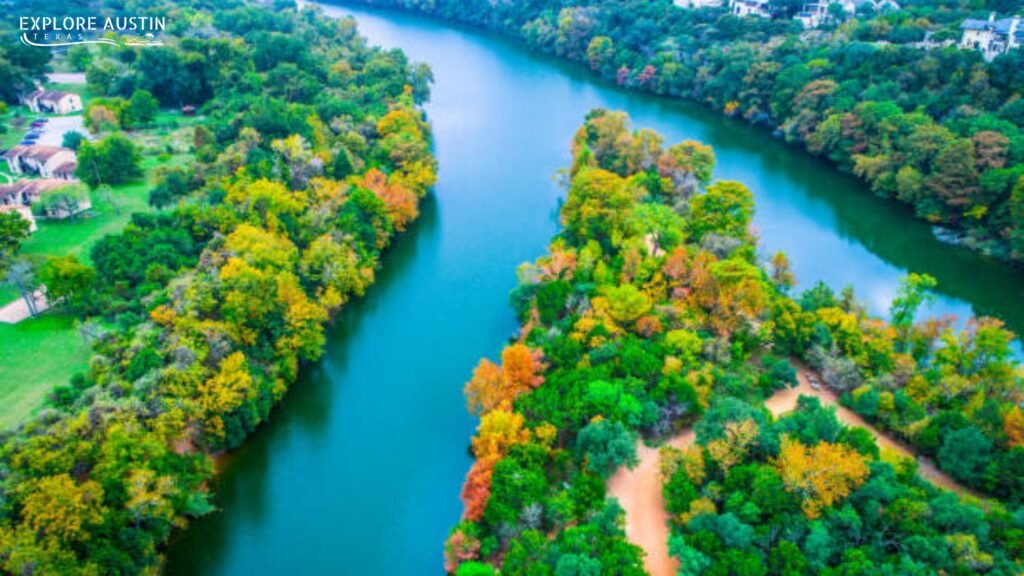
The most important waterway in Austin is the Colorado River — not the famous one from the Grand Canyon, but Texas’s own 862-mile river that flows from Dawson County all the way down to Matagorda Bay on the Gulf of Mexico. It passes directly through Austin, and depending on where you’re standing, it looks completely different.
In downtown Austin, the Colorado has been dammed to form Lady Bird Lake, a calm urban reservoir that locals use almost every single day. Upstream, it widens into Lake Austin, where motorized boats, pontoon rentals, and watersports are all fair game. Further upstream still is Lake Travis, one of the largest lakes in the state. Together with Lake Buchanan, Inks Lake, Lake LBJ, and Lake Marble Falls, these reservoirs form the Highland Lakes chain — all carved from the same river.
A lot of Austinites don’t realize they’re paddling the Colorado when they’re out on Lady Bird Lake. It’s the same water, just held back by Tom Miller Dam on one end and Longhorn Dam on the other.
Lady Bird Lake: The City’s Living Room
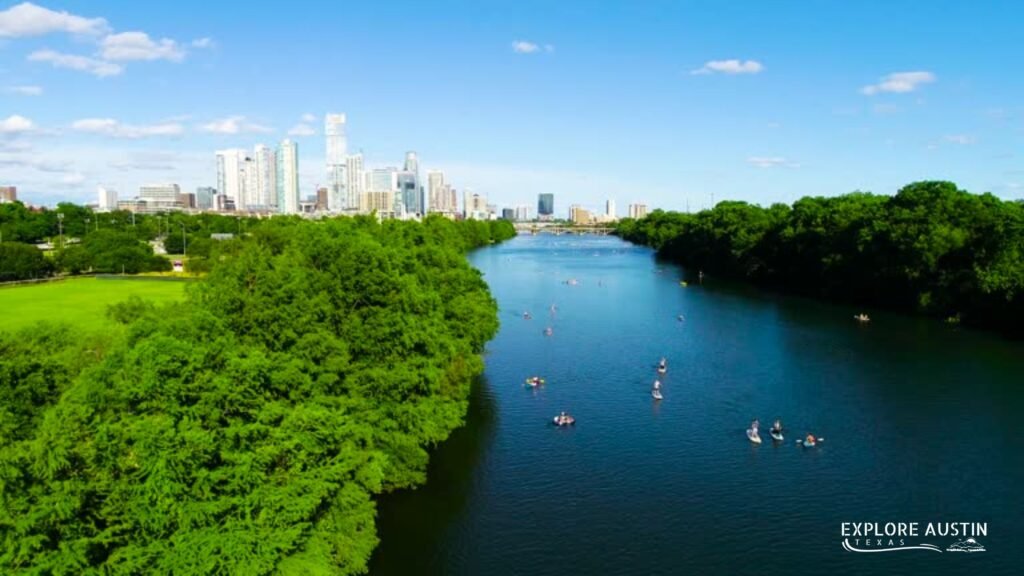
You can’t talk about rivers near Austin Texas without spending serious time on Lady Bird Lake. It’s the stretch of the Colorado River that runs right through downtown, and it draws more daily users than almost any park in the state.
Motorized boats aren’t allowed here, which makes it incredibly calm and ideal for non-motorized water sports. Kayaking on Lady Bird Lake is one of the most popular activities in the city — there are multiple rental outfitters along the shore offering kayaks, canoes, and stand-up paddleboards (SUP) at reasonable hourly rates. Rowing Dock, Texas Rowing Center, Zilker Park Boat Rentals, and EpicSUP are among the most established names on the water.
One thing worth knowing upfront: swimming is technically prohibited in Lady Bird Lake under city ordinance. This surprises a lot of visitors. If you want to swim in the Colorado River itself, head to Emma Long Metropolitan Park a few miles northwest — it has an open shorefront on the river and is a favorite for families on hot summer afternoons.
For kayakers who want something a little more dramatic, the clear kayak sunset tour that goes past the Congress Avenue Bridge at dusk is worth booking at least once. Watching a million bats pour out from under the bridge from a kayak on the water is genuinely something else.
Barton Creek: Austin’s Secret Right Under Your Nose
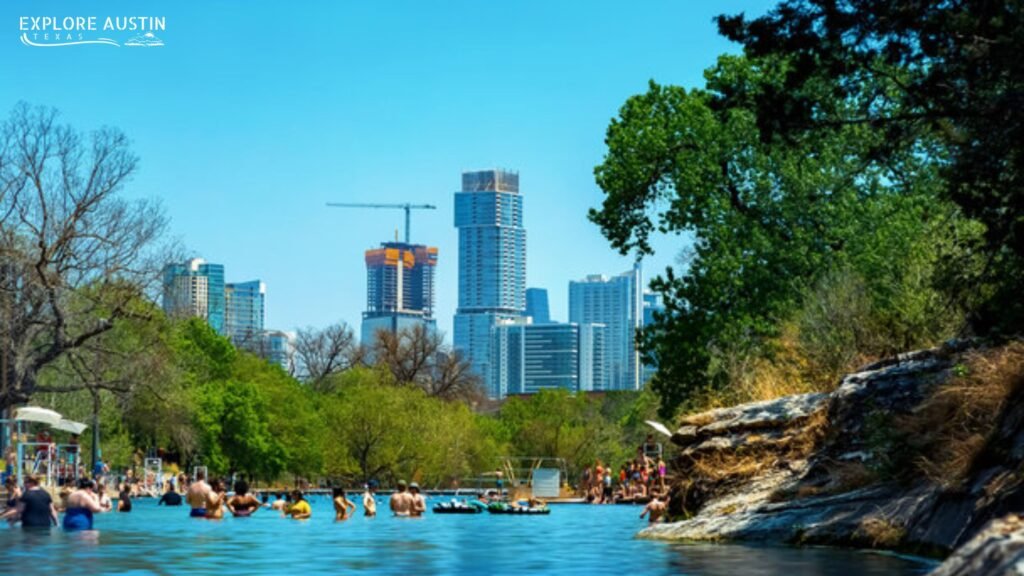
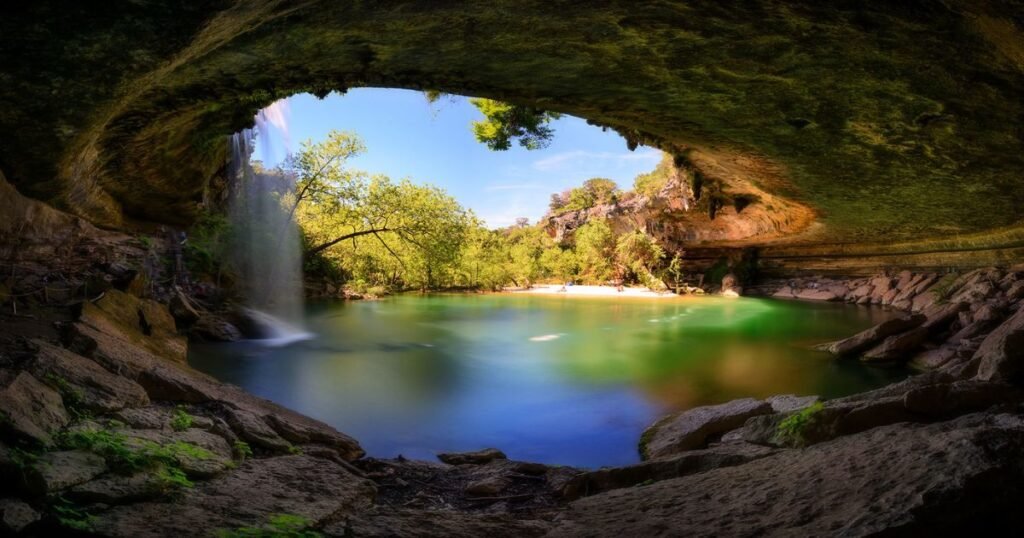
If Lady Bird Lake is Austin’s living room, Barton Creek Greenbelt is its backyard. The creek runs about 40 miles before joining the Colorado River at Zilker Park, and the Greenbelt itself stretches 7.25 miles of protected limestone bluffs, dense cedar and oak, and several natural swimming holes that are completely free to access.
The most popular spots along the Barton Creek Greenbelt are Twin Falls, Campbell’s Hole, and Sculpture Falls. Water levels fluctuate with rainfall, so it’s worth checking conditions before heading out — but on a good week in May or early June, these swimming holes are genuinely stunning. Crystal-clear, cold water, shaded by cliffs. In the middle of a Texas summer, they feel like a miracle.
The creek is also fed by Barton Springs, which emerges from the Edwards Aquifer and stays around 68 degrees year-round. Barton Springs Pool — the actual public pool built around the natural springs — is one of Austin’s most iconic places. Admission runs about $5–9 depending on residency status, and it’s open almost every day of the year.
Rivers Near Austin for Tubing: San Marcos, Guadalupe, and Comal
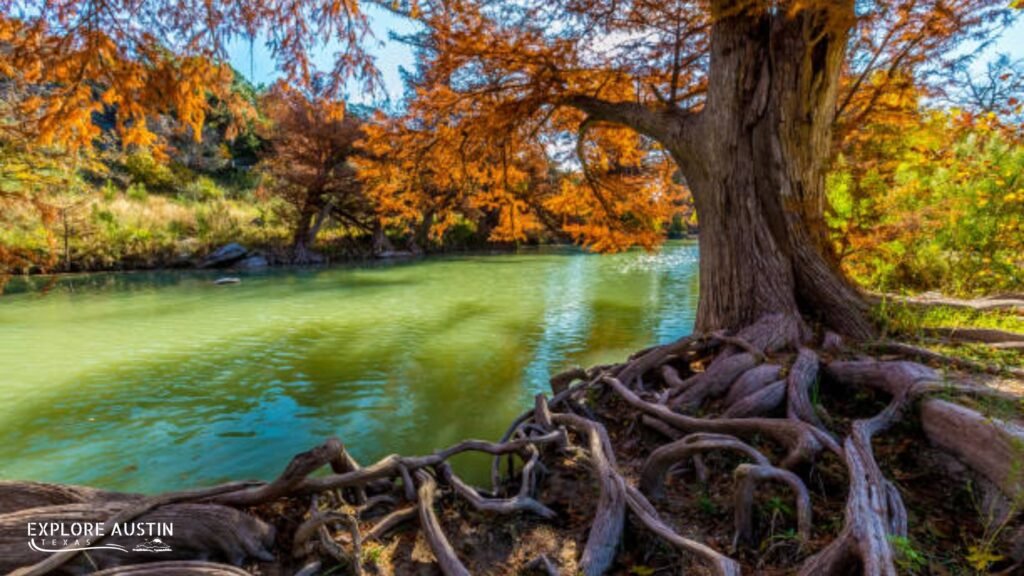
Here’s where things get really fun. The best river tubing near Austin isn’t technically in Austin — it’s about 30 to 60 minutes south, and it’s absolutely worth the drive.
San Marcos River is the closest tubing destination to downtown Austin and consistently rated the best option for most people. It’s spring-fed, which means the water stays a clear, cool 72 degrees even in August when the air temperature is pushing 105. The float takes about three hours, there are organized outfitters with shuttle transportation, and BYOB is fully legal on the river as long as there’s no glass or styrofoam. ATXcursions runs regular public and private trips departing from East Riverside in Austin, making it easy to do without a car.
Guadalupe River near New Braunfels is the wilder option. It’s about 55 miles from Austin, runs through gorgeous Hill Country terrain, and has a reputation for livelier weekend crowds. Depending on your entry point, a float can run anywhere from 1.5 to 5 hours. If you access through Guadalupe State Park, you can combine tubing with over 13 miles of hiking trails and even camping. Rockin’ R is one of the most well-known outfitters on the Guad.
Comal River in New Braunfels is only 2.5 miles long, which makes it the shortest — and arguably most relaxed — tubing experience near Austin. It’s broad and slow-moving, family-friendly, and runs right through the heart of town. There’s also the famous “tube chute,” a concrete waterslide that drops you back into the river, which kids absolutely love. One heads-up: New Braunfels enforces a strict can ban on the Comal, so glass and cans are both prohibited.
For families with younger kids or anyone who prefers a lower-key experience, the Comal wins. For the best overall float, the San Marcos is hard to beat.
Lake Travis and Lake Austin: For Boats, Not Tubes
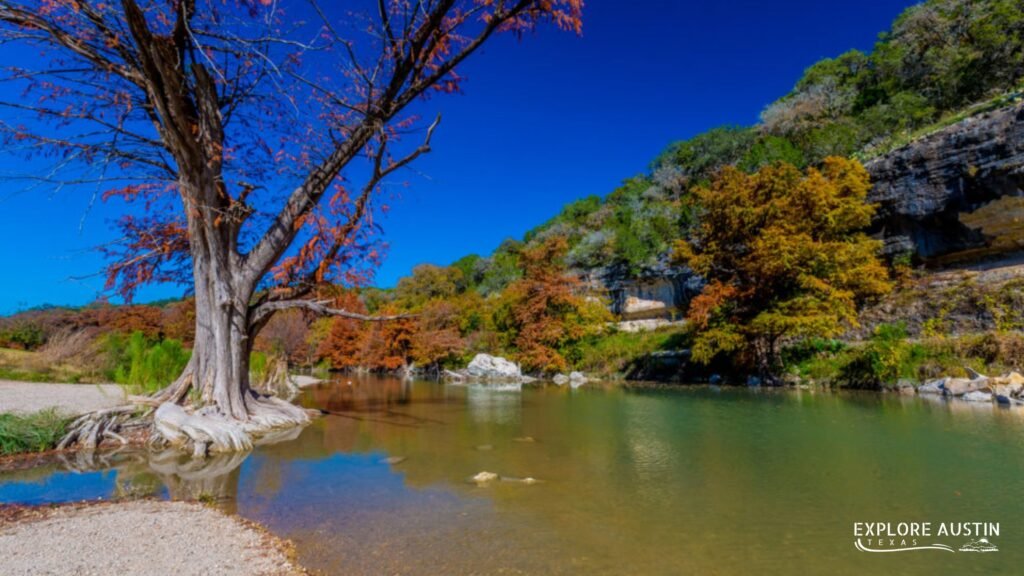
If you’re looking to get on the water with a motor under you, Lake Travis and Lake Austin are where that happens. Lake Travis is one of the largest and most popular lakes in Texas, stretching more than 60 miles with steep limestone canyon walls and crystal-clear blue water — especially impressive after a good rain season.
Boat rentals on Lake Austin and Lake Travis range from standard motorboats to full pontoons, and both lakes have lakeside restaurants with docks where you can pull up and eat. Paddleboarding, wakeboarding, and water skiing are all common on both lakes. Kayaking is also an option, though the motorized boat traffic means you’ll want to stay aware and hug the shoreline.
For a calmer paddling experience with cleaner sightlines, Lady Bird Lake is still the better choice for kayaks and SUPs.
Quick Practical Tips Before You Go
A few things that’ll save you from learning the hard way. Always check water levels before heading to Barton Creek Greenbelt — the swimming holes can disappear entirely during dry stretches. Book tubing trips on San Marcos or Guadalupe at least a week in advance during peak summer weekends, because they sell out fast. For Lady Bird Lake kayak rentals, weekday mornings are significantly less crowded than Saturday afternoons. And if you’re floating the Comal, don’t forget — no cans, no glass, and respect the can ban rules or you’ll be asked to leave.
Sunscreen, water shoes, and a dry bag for your phone are non-negotiable on any Texas float trip. The sun is relentless.
Frequently Asked Questions
The Colorado River runs directly through Austin, Texas. In downtown Austin, a dammed section of it forms Lady Bird Lake (formerly Town Lake). The same river continues upstream as Lake Austin and Lake Travis, all part of the Highland Lakes chain managed by the Lower Colorado River Authority.
Swimming in Lady Bird Lake is prohibited by city ordinance. However, you can swim in the Colorado River at Emma Long Metropolitan Park, in the spring-fed Barton Creek Greenbelt swimming holes like Twin Falls and Sculpture Falls, and at Barton Springs Pool. Nearby rivers like the San Marcos, Guadalupe, and Comal are all open for swimming and tubing.
Most locals and tour operators agree that the San Marcos River is the best overall float near Austin. It’s spring-fed, stays cool and clear all summer, is the closest to downtown (about 30 minutes), and has organized shuttle services making it easy to go without a car. The Guadalupe River is the better pick for a livelier, more adventurous float. The Comal River in New Braunfels is the top choice for families with young kids.
The San Marcos River is approximately 30–35 minutes from downtown Austin, depending on your starting point. Most organized tubing trips depart from East Riverside in Austin and provide roundtrip transportation to the river and back, so you don’t need to worry about driving yourself or leaving a car at the put-in.